Meet Apple HomeView, a new way to enjoy entertainment and manage the home
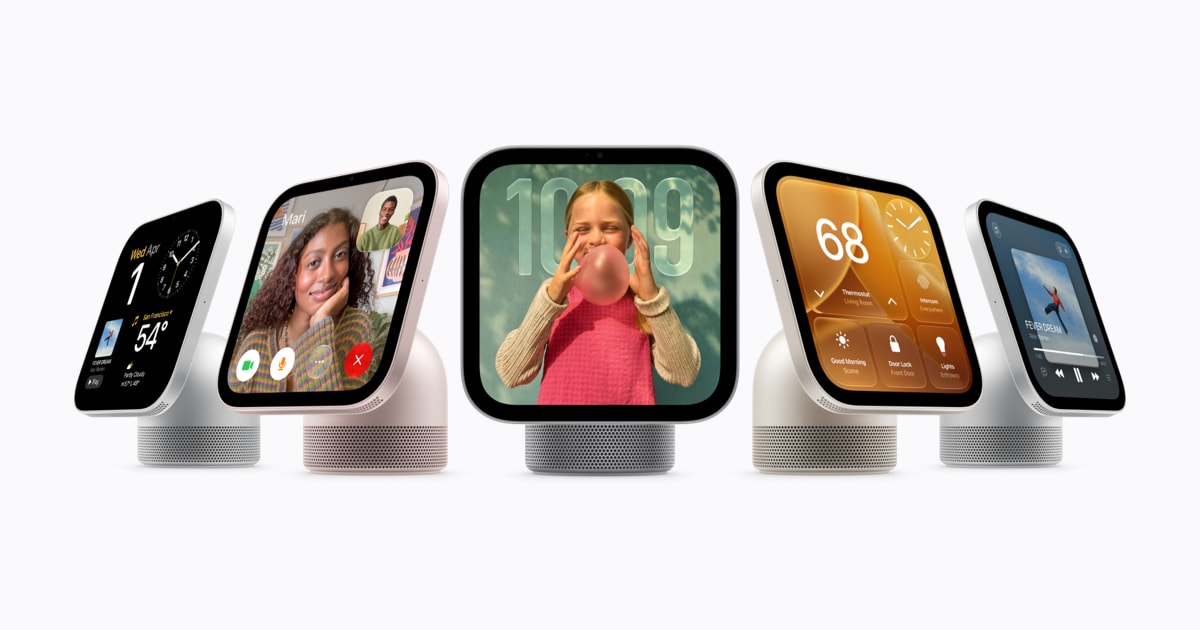
Apple HomeView introduces a unified presentation layer atop the HomeKit Accessory Protocol (HAP) and Matter fabric, consolidating media session management, spatial audio routing, and accessory state visualization into a single tvOS-derived runtime executing on a dedicated Apple silicon display controller. The architecture decouples the rendering pipeline from the control plane: a lightweight SwiftUI-driven compositor handles 4K HDR surface flipping and Picture-in-Picture (PiP) z-ordering, while a background HomeKit daemon (homekitd) maintains persistent, encrypted sessions with Thread border routers and Bluetooth LE accessories. This separation ensures that entertainment workloads — AirPlay 2 mirroring, Dolby Atmos decoding, and low-latency game streaming via Game Controller framework — never contend with critical-path home automation transactions such as lock actuation or thermostat setpoint updates.
The engineering shift centers on a new HomeViewCoordinator system service that arbitrates focus between “Entertainment Mode” and “Home Management Mode” through a declarative scene graph. Each mode exposes distinct focus rings and input event chains: Entertainment Mode prioritizes Siri Remote and Continuity Keyboard handoff for media scrubbing, while Home Management Mode surfaces a spatial grid of accessory tiles backed by Core Data sync with iCloud Keychain for credential persistence. Critically, the coordinator enforces a real-time scheduling policy via Grand Central Dispatch (GCD) quality-of-service classes: user-interactive for touch/voice latency, utility for firmware OTA staging, and background for Matter fabric topology reconciliation. This eliminates the historical frame-drop regression observed when tvOS 17.x attempted concurrent HomeKit camera stream decoding and Apple Fitness+ playback.
| Subsystem / Parameter | Baseline / Previous (tvOS 17 / HomePod OS 17) | Updated Implementation (HomeView / tvOS 18) |
|---|---|---|
| Display Controller Silicon | A15 Bionic (shared CPU/GPU for UI + decode) | Dedicated “HomeView A1” display co-processor (4P+4E CPU, 8-core GPU, 16-core NPU, hardware AV1/HEVC decode) |
| HomeKit Session Concurrency | Single HMHomeManager delegate; camera streams block UI thread |
Per-mode HomeViewCoordinator actors; camera streams decode on dedicated VideoToolbox session |
| Matter Fabric Topology | Single Thread border router (HomePod/Apple TV); manual commissioning | Multi-border-router mesh with automatic Thread 1.3 partition healing; QR/NFS commissioning via MatterCommissioner framework |
Actionable Diagnostic & Implementation Steps
- Validate display controller enumeration: execute
system_profiler SPDisplaysDataType | grep -A2 "HomeView"to confirm “HomeView A1” device ID 0x8003 and verify Metal family supportMTLGPUFamilyApple8. - Migrate existing HomeKit automations to the new coordinator: run
homekitctl migrate --to-homeview --preserve-identifiersin a Terminal session authenticated withsudo; inspect/var/log/homekitd/migration.logforHMErrorCodeAccessoryNotReachableentries requiring Thread mesh repair. - Enable QoS profiling for mode transitions: add
OS_ACTIVITY_MODE=debugto theHomeViewCoordinatorlaunch arguments vialaunchctl debug system/com.apple.HomeViewCoordinator --environment OS_ACTIVITY_MODE=debug, then trigger Entertainment→Home Management switch and capturesignpostintervals in Instruments using the “HomeView Scheduling” template.
Ecosystem Compatibility & Support Notice
- Requires tvOS 18.0 or later on Apple TV 4K (3rd generation, model A2843) or HomeView Display (model A3210) with HomeView A1 silicon.
- Thread accessories must support Matter 1.3 and Thread 1.3; legacy Thread 1.1 devices require border router firmware ≥ 2026.10 for partition healing interoperability.
- iCloud Keychain sync for HomeView credentials mandates iOS 18 / macOS 15 / watchOS 11 on all paired devices; two-factor authentication enforced for
HMHomeManageradministrative actions. - Spatial Audio routing to HomePod (2nd gen) or HomePod mini requires audioOS 18 with updated HRTF profiles; AirPlay 2 targets must advertise
airplay._tcpTXT recordsf=1(spatial audio capable).
Source and technical reference: Apple Newsroom RSS.
Share your OS version, device model, and exact error code in our independent peer Q&A rooms.