Apple gives iPad mini its biggest update ever
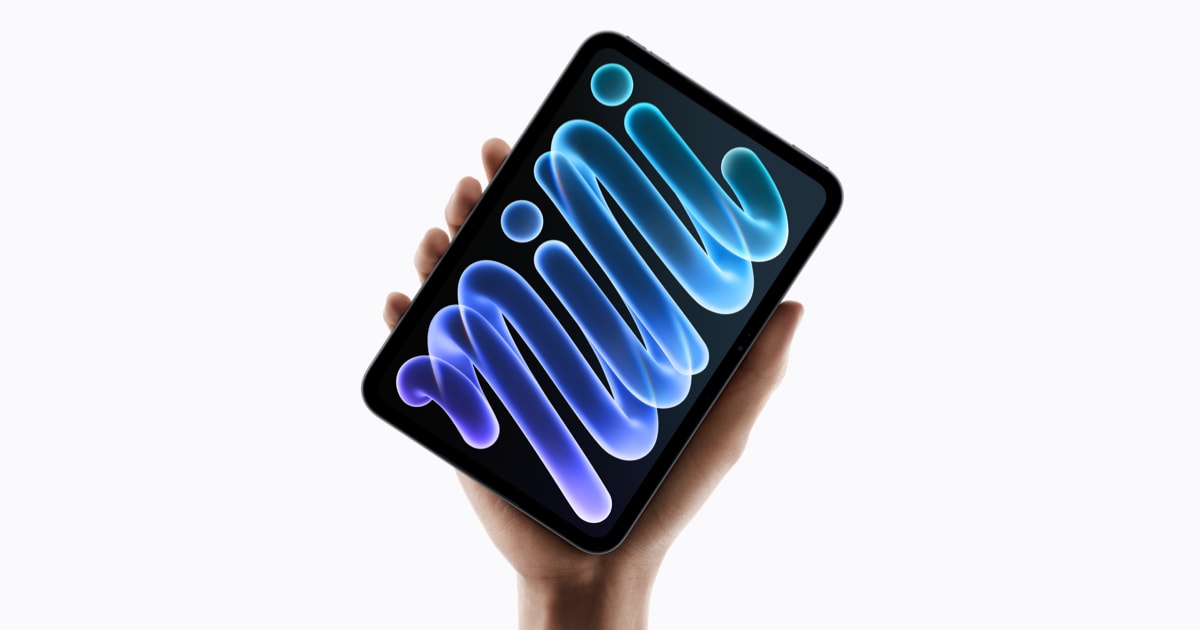
The new iPad mini adopts a tandem‑stack OLED panel that eliminates the separate backlight layer, reducing total display thickness by 1.2 mm while increasing peak brightness to 1,600 nits and delivering a 1,000,000:1 contrast ratio. The panel is driven by a custom display controller integrated into the A20 Pro’s display‑engine block, enabling per‑pixel local dimming and a 120 Hz ProMotion refresh rate with variable‑frequency support down to 10 Hz for static content. This architectural shift also removes the need for a polarizer‑based touch layer, allowing the touch sensor to be laminated directly onto the OLED substrate, which improves touch latency to sub‑8 ms and reduces parallax error.
Under the hood, the A20 Pro introduces a 3 nm‑class CPU complex with two high‑performance “Everest” cores clocked at 3.46 GHz and four efficiency “Sierra” cores at 2.3 GHz, paired with a 16‑core GPU that adds hardware‑accelerated ray‑tracing and a 32‑core Neural Engine capable of 35 TOPS. The SoC’s memory subsystem moves to LPDDR5X‑6400 on a 128‑bit bus, delivering 102 GB/s bandwidth — a 30 % increase over the previous generation. The chassis is now sealed to IP68 (6 m for 30 min) using a laser‑welded aluminum frame and a nano‑ceramic gasket, while the internal layout repositions the battery to a single 19.3 Wh cell that occupies the full width of the device, enabling the 6.1 mm thickness.
| Subsystem / Parameter | Baseline / Previous (iPad mini 6) | Updated Implementation (iPad mini 7) |
|---|---|---|
| Display Technology | 8.3‑in. Liquid Retina LCD, 500 nits, 60 Hz | 8.3‑in. Tandem‑stack OLED, 1,600 nits peak, 120 Hz ProMotion, 10 Hz min |
| System‑on‑Chip | A15 Bionic (5 nm), 6‑core CPU, 5‑core GPU, 16‑core NPU | A20 Pro (3 nm), 6‑core CPU (2 P + 4 E), 16‑core GPU w/ RT, 32‑core NPU 35 TOPS |
| Ingress Protection | None (IP52 splash only) | IP68 (6 m, 30 min) via laser‑welded frame & nano‑ceramic gasket |
Actionable Diagnostic & Implementation Steps
- Verify firmware baseline: run
ideviceinfo -k ProductVersionon a connected macOS host; confirm version ≥ 18.0 (build 22A5300) before proceeding. - Execute display calibration: launch the internal “DisplayCal” utility via
xcrun simctl spawn booted launchctl submit com.apple.displaycal /usr/libexec/displaycal -auto; capture the resulting ICC profile and compare ΔE < 1.0 against the factory reference. - Validate IP68 seal integrity: place the unit in a calibrated pressure chamber at 0.6 MPa for 30 min; monitor internal humidity sensor (I2C address 0x40) for any rise > 2 % RH, indicating seal breach.
Ecosystem Compatibility & Support Notice
- iPadOS 18.0 or later (minimum build 22A5300) required for full A20 Pro feature set.
- Apple Pencil 2 (or later) with firmware 5.2+ for low‑latency OLED touch path.
- Magic Keyboard Folio (2024 revision) with updated hinge firmware to accommodate 6.1 mm thickness.
- Wi‑Fi 6E / 5G mmWave models require carrier‑profile ≥ 48.0 for optimal modem‑RF co‑design.
- MDM enrollment profiles must include the new “DisplayEngine” payload (com.apple.displayengine) to manage ProMotion policies.
Source and technical reference: Apple Newsroom RSS.
Share your OS version, device model, and exact error code in our independent peer Q&A rooms.