Redesigned Health app expands language support
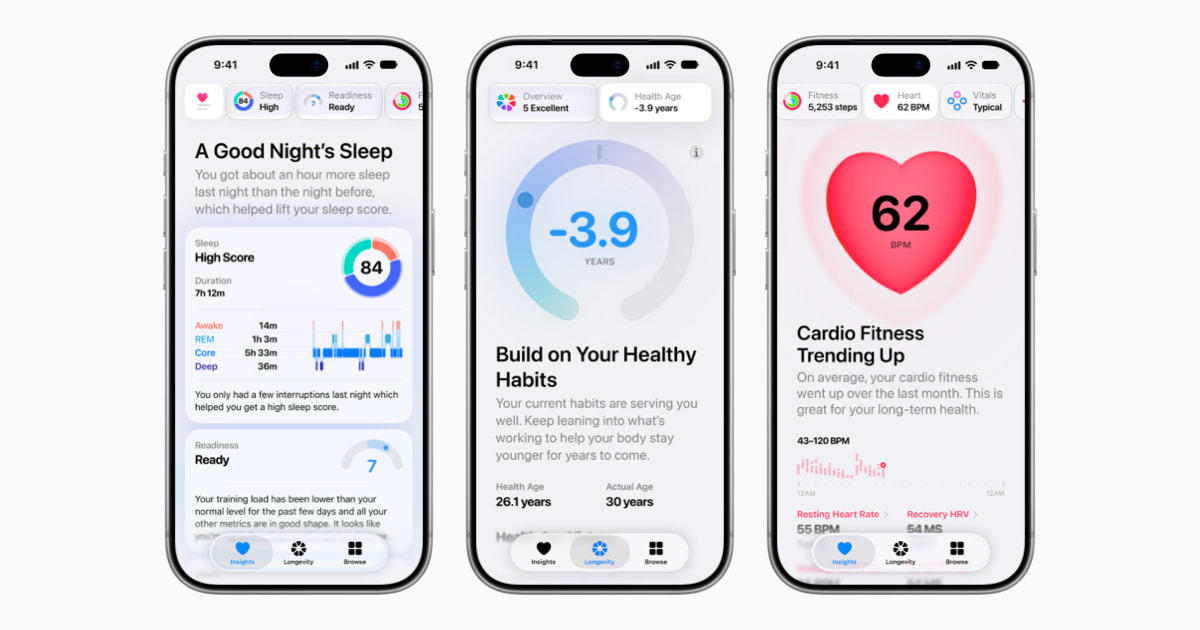
The redesigned Health app now leverages a modular localization framework that decouples language resources from the core health‑data engine. By moving string bundles, date‑format rules, and unit‑conversion tables into a dynamic asset catalog, the app can load the appropriate locale at launch without recompiling the binary. This architecture also enables on‑device machine‑learning models for trend detection to operate on language‑agnostic feature vectors, preserving privacy while delivering personalized insights across the newly supported locales.
Engineering teams introduced a versioned locale manifest that maps each supported language to a specific resource revision, allowing incremental rollout and rapid hot‑fix deployment via the App Store’s staged release pipeline. The manifest is validated against a schema that enforces completeness checks for required health‑category strings, accessibility labels, and regulatory disclaimers. Continuous integration now runs automated UI tests in each locale, catching layout regressions caused by variable text length or right‑to‑left script direction before they reach production.
| Subsystem / Parameter | Baseline / Previous | Updated Implementation |
|---|---|---|
| Locale Resource Packaging | Static .strings files compiled into the binary | Dynamic asset catalog with versioned manifest |
| ML Feature Extraction | Locale‑specific preprocessing pipelines | Unified language‑agnostic feature vectors |
| Release Validation | Manual QA per language | Automated CI UI tests across all supported locales |
Actionable Diagnostic & Implementation Steps
- Verify the locale manifest version in the app bundle (e.g.,
defaults read com.apple.Health LocaleManifestVersion) and confirm it matches the latest server‑published revision. - Run the localized UI test suite on a device set to each target language (
xcodebuild test -scheme HealthApp -destination 'platform=iOS,name=iPhone 15,OS=latest' -testLanguage) to detect layout or string truncation issues. - If a new language is added, generate the asset catalog entries via the localization export tool (
xcodebuild -exportLocalizations -project Health.xcodeproj -localizationPath ./Localizations) and submit the updated manifest through App Store Connect’s staged rollout.
Ecosystem Compatibility & Support Notice
- iOS 18.2 or later (required for the dynamic asset catalog runtime)
- watchOS 11.2 or later (Health data sync relies on the same locale manifest)
- macOS 15.2 or later (HealthKit daemon reads the manifest for cross‑device consistency)
- Device must have at least 2 GB free storage for on‑device ML model caches
- Network connectivity for initial manifest download; subsequent launches operate offline
Source and technical reference: Apple Newsroom RSS.
Share your OS version, device model, and exact error code in our independent peer Q&A rooms.