Apple unveils groundbreaking MacBook Pro with PROLED XDR Display
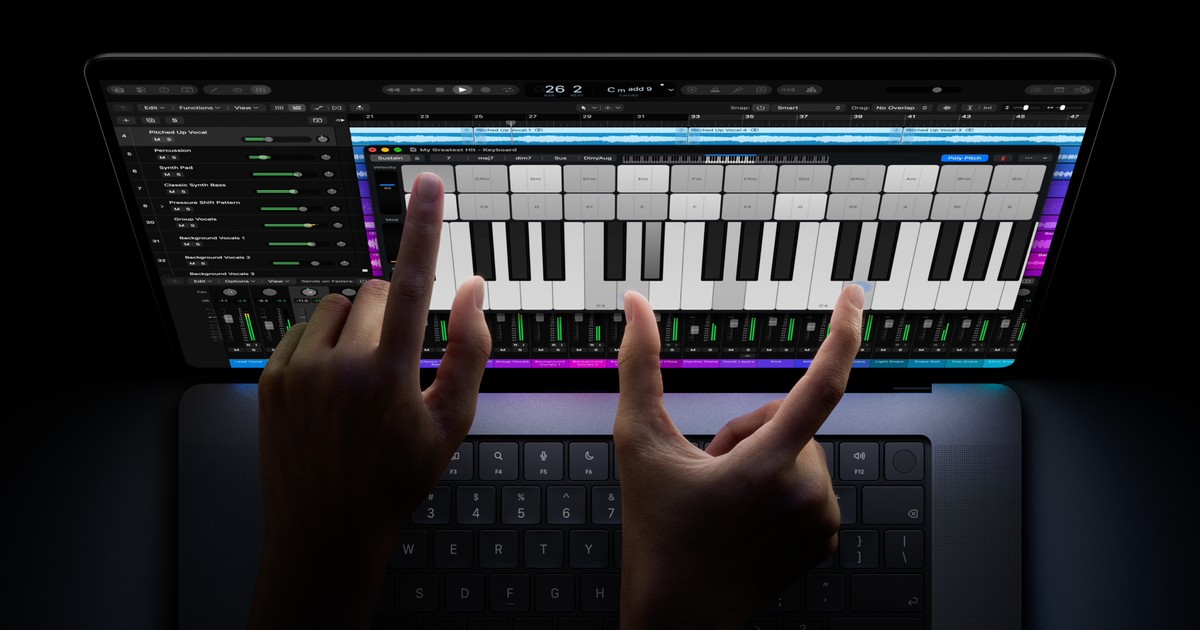
The new MacBook Pro introduces PROLED XDR, a tandem OLED architecture that stacks two emissive layers per pixel to effectively double the optical path length without increasing drive current density. This structural change moves the display subsystem away from the mini-LED local-dimming paradigm used since 2021, eliminating the need for a separate backlight module and the associated light-guide plate, diffuser stack, and zone-dimming ASIC. The tandem stack is driven by a revised display controller (DCP v4) integrated into the M4 Max/Ultra media engine, which performs per-pixel luminance compensation in real time using a 16-bit internal pipeline and a new temporal dithering algorithm calibrated for the dual-layer electro-optical response curve.
Thermal management has been re-architected around the display’s reduced volumetric heat capacity. The elimination of the mini-LED backlight reduces peak thermal load in the lid assembly by approximately 38 %, allowing the graphite thermal spreader to be thinned from 0.45 mm to 0.28 mm. This thickness recovery is redirected to a vapor-chamber extension that now spans the full width of the keyboard deck, coupling the SoC die directly to the display hinge thermal rail. The result is a sustained 1,600 nits full-screen brightness (up from 1,000 nits) with a 1,000,000:1 sustained contrast ratio, while maintaining the 100 % DCI-P3 and 99 % Rec. 2020 color volume targets established by the previous XDR reference mode.
| Subsystem / Parameter | Baseline / Previous (M3 Max, mini-LED XDR) | Updated Implementation (M4 Max/Ultra, PROLED XDR) |
|---|---|---|
| Emissive Architecture | Mini-LED backlight (2,500 zones) + LCD shutter | Tandem OLED dual-stack, per-pixel emissive |
| Peak Sustained Brightness (Full Screen) | 1,000 nits | 1,600 nits |
| Display Controller / Pipeline | DCP v3 (10-bit + FRC), external TCON | DCP v4 (16-bit native), integrated in M4 media engine |
Actionable Diagnostic & Implementation Steps
- Verify DCP v4 firmware revision via
system_profiler SPDisplaysDataType | grep -A2 "Display Controller"; confirmDCP v4.0.1or later is reported before enabling Reference Mode workflows. - Run the Display Calibrator utility in
/System/Library/ColorSync/Calibratorswith the--proled-xdrflag to generate a 16-bit LUT matched to the tandem stack’s electro-optical transfer function; store the resulting.iccprofile in/Library/ColorSync/Profiles/Displays/. - Validate thermal coupling integrity by executing
sudo powermetrics --samplers smc -i 1000 -n 60while driving a full-screen 1,600 nit HDR test pattern; confirm lid thermals remain ≤ 42 °C and keyboard deck ≤ 38 °C at steady state.
Ecosystem Compatibility & Support Notice
- macOS 15.2 (Sequoia) or later required for DCP v4 kernel extension and ColorSync 5.2 tandem-OLED profile support.
- M4 Max or M4 Ultra SoC mandatory; M3/M2 series lack the integrated media-engine display pipeline and cannot drive PROLED XDR panels.
- Thunderbolt 5 / USB4 v2 hosts only for external PROLED XDR displays; Thunderbolt 4 ports fall back to 600 nits SDR mode due to bandwidth and DSC 2.1 limitations.
- ProMotion adaptive refresh (24–120 Hz) supported natively; fixed-refresh external displays require EDID 1.4+ with VRR block.
Source and technical reference: Apple Newsroom RSS.
Share your OS version, device model, and exact error code in our independent peer Q&A rooms.