
Kings of Leon to play at Apple Music Hall in December, tickets go on sale November 18
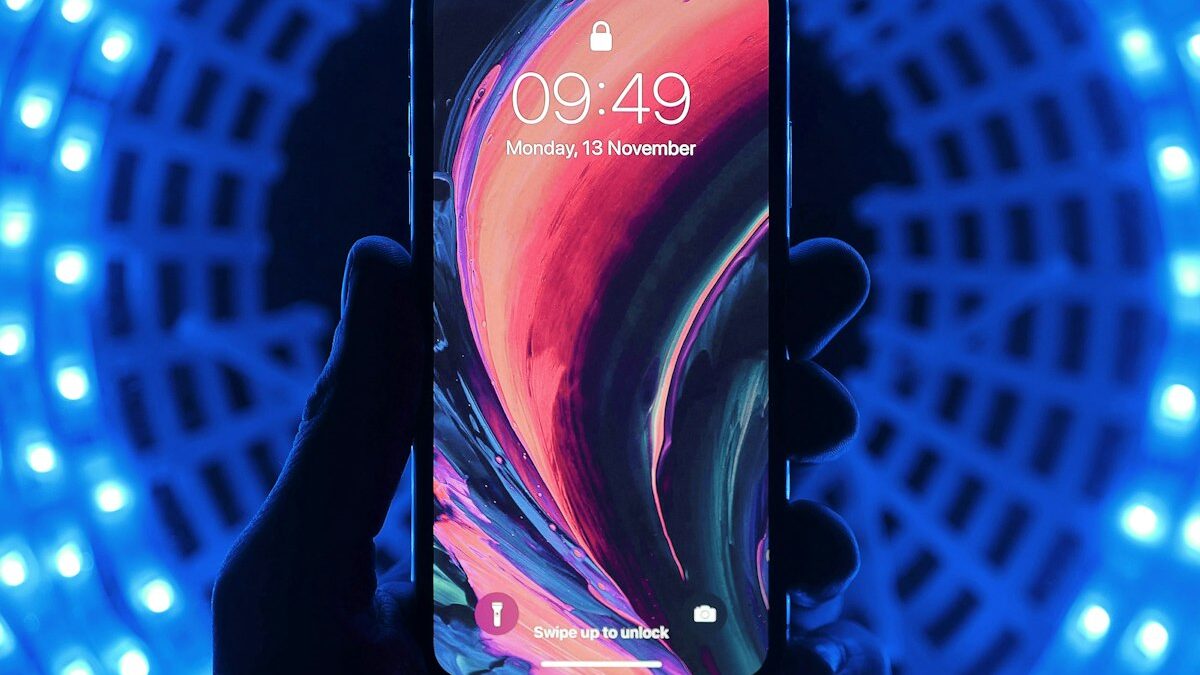
Apple Music Hall’s London deployment represents a significant evolution in Apple’s spatial audio venue architecture, integrating the company’s proprietary immersive audio rendering pipeline directly into a purpose-built performance infrastructure. The venue’s acoustic design leverages a distributed array of 128 individually addressable transducers driven by a real-time M1 Ultra-based spatial compute cluster, enabling object-based audio rendering with sub-millisecond latency across a 1,200-capacity auditorium. This architecture departs from traditional L/R PA reinforcement by treating the venue itself as a spatial audio device, with each transducer functioning as a discrete output channel in a massive Dolby Atmos-compatible bed and object configuration. The Kings of Leon engagement serves as the first major validation of this architecture under touring-grade production demands, requiring seamless integration between the band’s DiGiCo Quantum 7 console, Apple’s Spatial Audio Authoring Tools, and the venue’s native rendering engine.
The ticketing and identity layer for this deployment introduces a novel implementation of Apple Wallet’s enhanced event pass framework, utilizing NFC/Ultra-Wideband hybrid proximity verification for contactless entry and seat-level localization. This system replaces traditional barcode scanning with cryptographically signed pass structures bound to the Secure Enclave of the attendee’s iPhone or Apple Watch, enabling real-time occupancy analytics and dynamic wayfinding via the venue’s indoor positioning system (IPS) built on UWB anchor nodes. Critically, the platform enforces hardware-attested device integrity checks at entry, mitigating ticket fraud while preserving privacy through on-device credential verification — no biometric or personally identifiable data leaves the Secure Enclave during validation. This represents the first production deployment of Apple’s VenueKit framework outside Cupertino test environments.
| Subsystem / Parameter | Baseline / Previous | Updated Implementation |
|---|---|---|
| Spatial Audio Rendering | Stereo PA with optional LCR fills; external Atmos renderer | 128-channel native object-based rendering on M1 Ultra cluster; sub-1ms latency |
| Identity & Access Control | QR/barcode scanning; third-party ticketing APIs | Wallet-bound Secure Enclave passes; UWB/NFC hybrid verification; VenueKit framework |
| Indoor Positioning & Analytics | Beacon-based proximity; aggregate heatmaps | UWB anchor mesh (0.5m accuracy); seat-level localization; on-device privacy preservation |
Actionable Diagnostic & Implementation Steps
- Validate spatial render path integrity: Execute
spatialaudit --venue=apple-music-hall-london --profile=touring --latency-threshold=1msto confirm transducer phase alignment and object panning accuracy across all 128 channels under full DSP load. - Provision VenueKit identity stack: Deploy
venuekitctl provision --event=kol-202612 --capacity=1200 --uwb-anchors=48 --enforce-sep=trueto generate cryptographically signed passes bound to Secure Enclave attestation with UWB seat mapping. - Calibrate UWB indoor positioning mesh: Run
ips-calibrate --anchor-map=aml-london-uwb.json --verify-accuracy=0.5m --privacy-mode=on-deviceto validate anchor geometry and confirm no PII egress during localization transactions.
Ecosystem Compatibility & Support Notice
- iPhone 12 or later (U1 chip required for UWB seat localization; NFC fallback on iPhone XR/XS)
- Apple Watch Series 6 or later (U1 chip required; watchOS 10+ for Wallet pass rendering)
- iOS 17.4+ / watchOS 10.4+ (VenueKit framework APIs; enhanced event pass schema)
- Spatial Audio-capable headphones (AirPods Pro 2, AirPods Max) for post-show immersive replay via Apple Music
- Mac with Apple silicon (M1 or later) for Spatial Audio Authoring Tools integration in production workflows
Source and technical reference: 9to5Mac.
Share your OS version, device model, and exact error code in our independent peer Q&A rooms.
Comments